A Name That Never Really Left Indian Hearts
The Sierra nameplate carries weight in India. For those who grew up through the 1990s, the original Tata Sierra was unmistakable three-door, rear-engined, unlike anything else on the road. It disappeared in 1999 and stayed gone for over two decades. When Tata Motors brought it back, first as a concept at Auto Expo 2020 and then again in 2023, the response was immediate and emotional. The production ICE Sierra has since arrived. And now, on June 30, 2026, the Tata Sierra EV gets its official debut. The electric version of one of India’s most nostalgic nameplates is nearly here.
Where It Sits in the Tata EV Family
The Tata Sierra EV will slot neatly between the Curvv EV and the Harrier EV in Tata’s electric portfolio. The Curvv EV is currently priced between Rs 16.99 lakh and Rs 19.19 lakh. The Harrier EV spans Rs 21.49 lakh to Rs 28.99 lakh. The Sierra EV is expected to occupy the space in between with an anticipated price range of approximately Rs 18 lakh to Rs 25 lakh. That positioning puts it squarely in the middle of the most contested segment in Indian electric vehicles facing the Mahindra BE 6, Hyundai Creta Electric, MG ZS EV, Maruti e Vitara and the Toyota Urban Cruiser Ebella.
The Platform and Battery Options
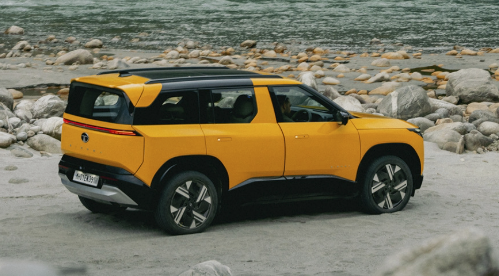
The Sierra EV will be built on Tata’s acti.ev+ architecture the same platform that underpins the Harrier EV. This shared foundation means the battery options are also expected to carry over. A 65kWh standard-range pack and a larger 75kWh extended-range pack are both anticipated. Three drivetrain variants are expected to be on offer a standard-range RWD, an extended-range RWD and an extended-range AWD. The AWD configuration is expected to be reserved exclusively for the 75kWh variant enabled by a second electric motor powering the front wheels. The extended-range RWD variant could be capable of up to 600km on a single charge a figure that would make it one of the longest-range electric SUVs available in this price bracket in India.
How the Electric Version Looks Different
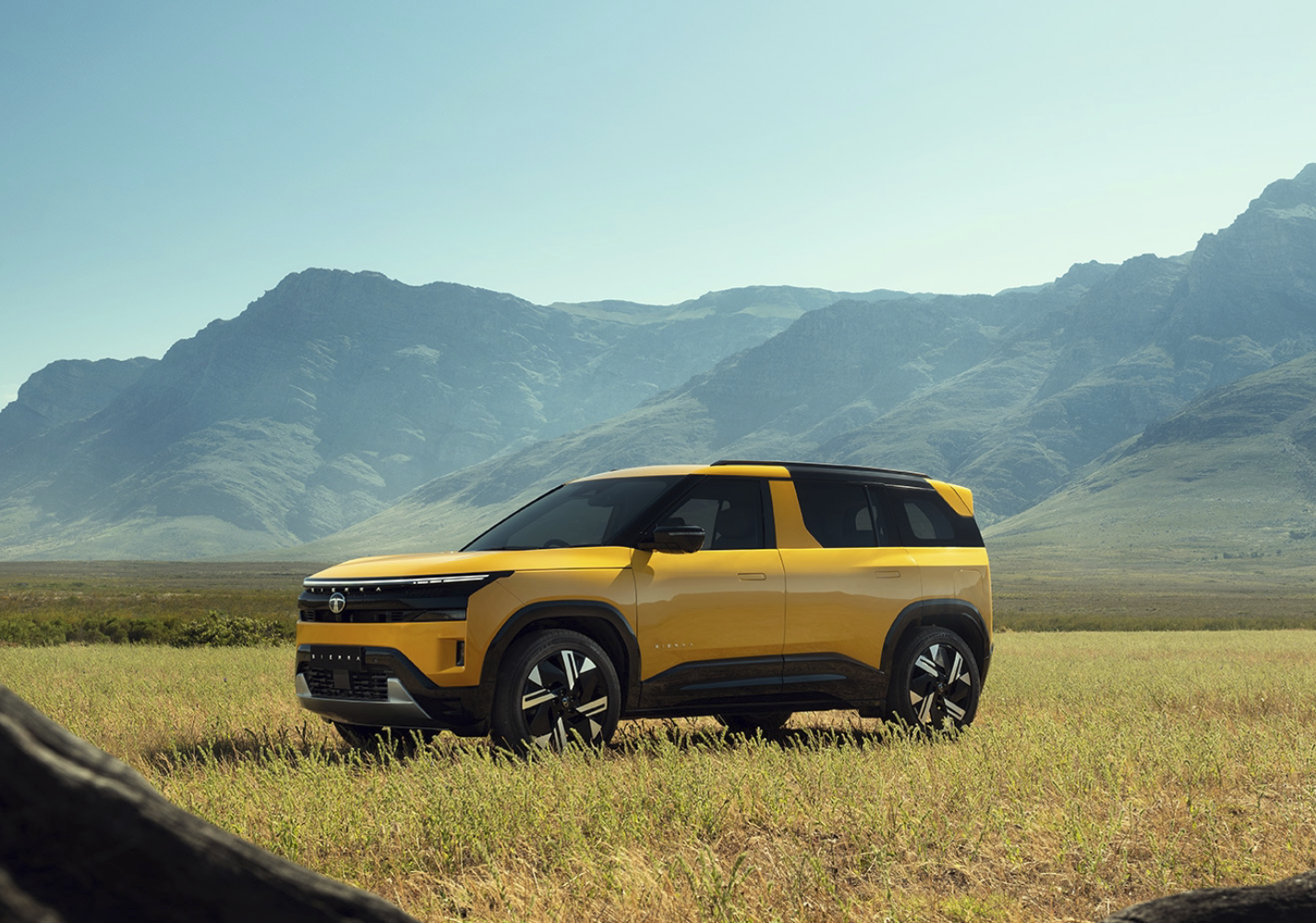
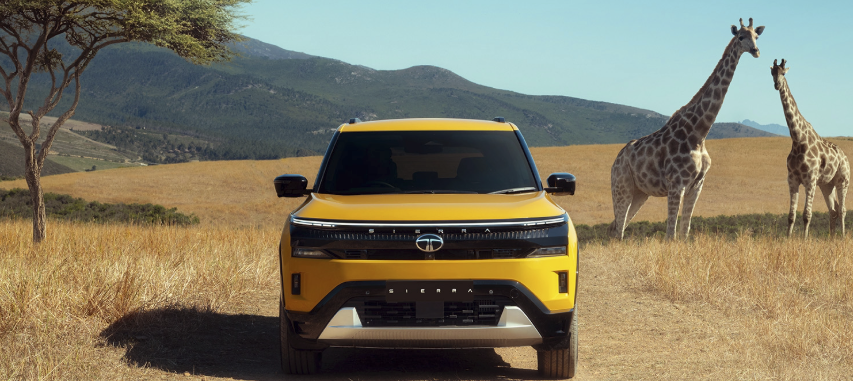
The Tata Sierra EV is not simply the ICE Sierra with a badge swap. Several deliberate design choices separate the two. The most significant change is at the front. The black front mask seen on the ICE model has been removed entirely. In its place sits a cleaner, largely body-coloured upper fascia. The blanked-off grille treatment is standard for EVs and here it gives the Sierra EV a smoother, more refined face compared to its petrol sibling.
The daytime running light bar which stretches across the full width of the vehicle is thicker and more visually consistent on the EV, creating a bolder presence. Horizontal headlamps and vertical fog lamps are positioned with black panel surrounds. Unique 19-inch alloy wheels are expected to further differentiate the two variants. The familiar .ev badging seen across Tata’s electric range will appear on the front door panels.
Inside Three Screens and EV-Specific Details
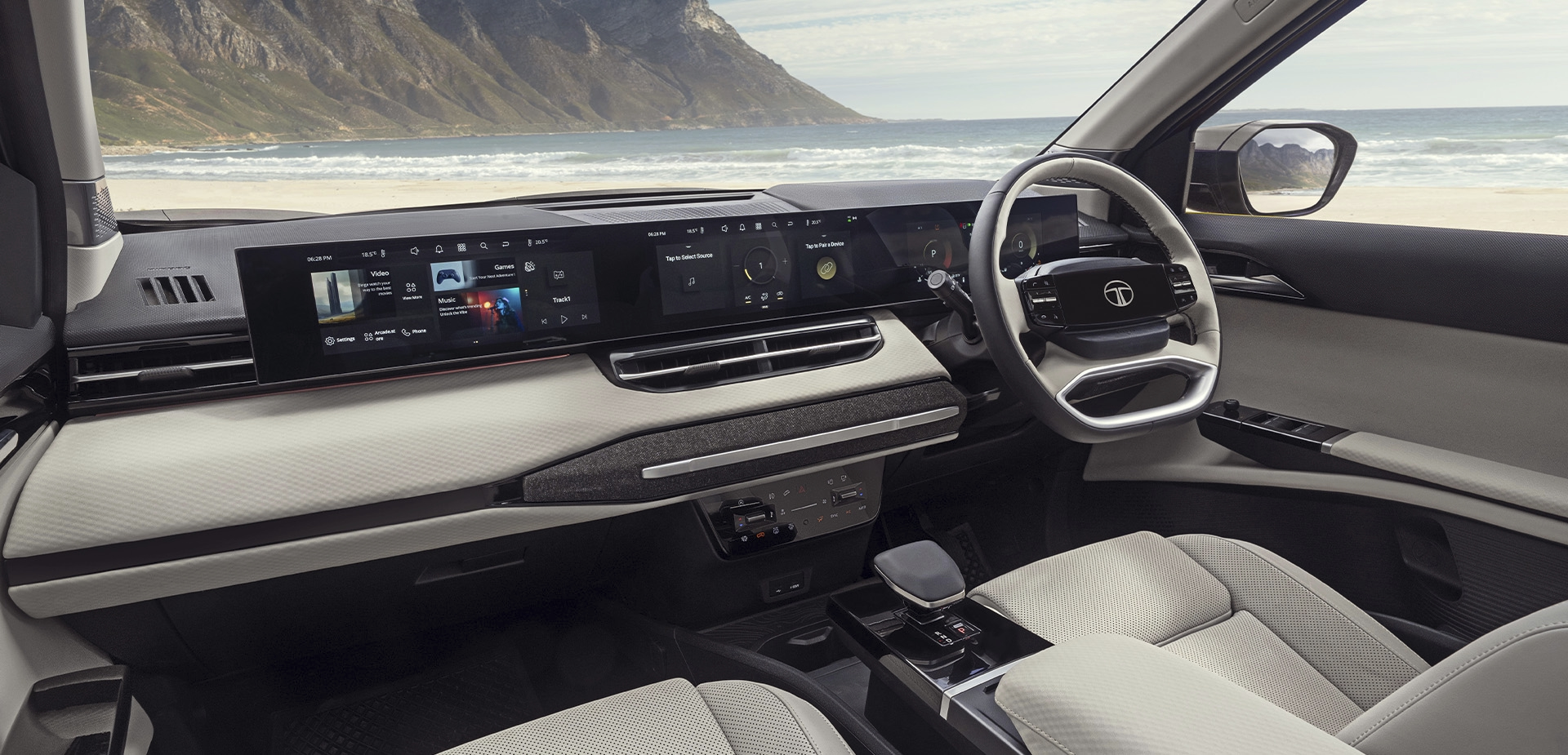
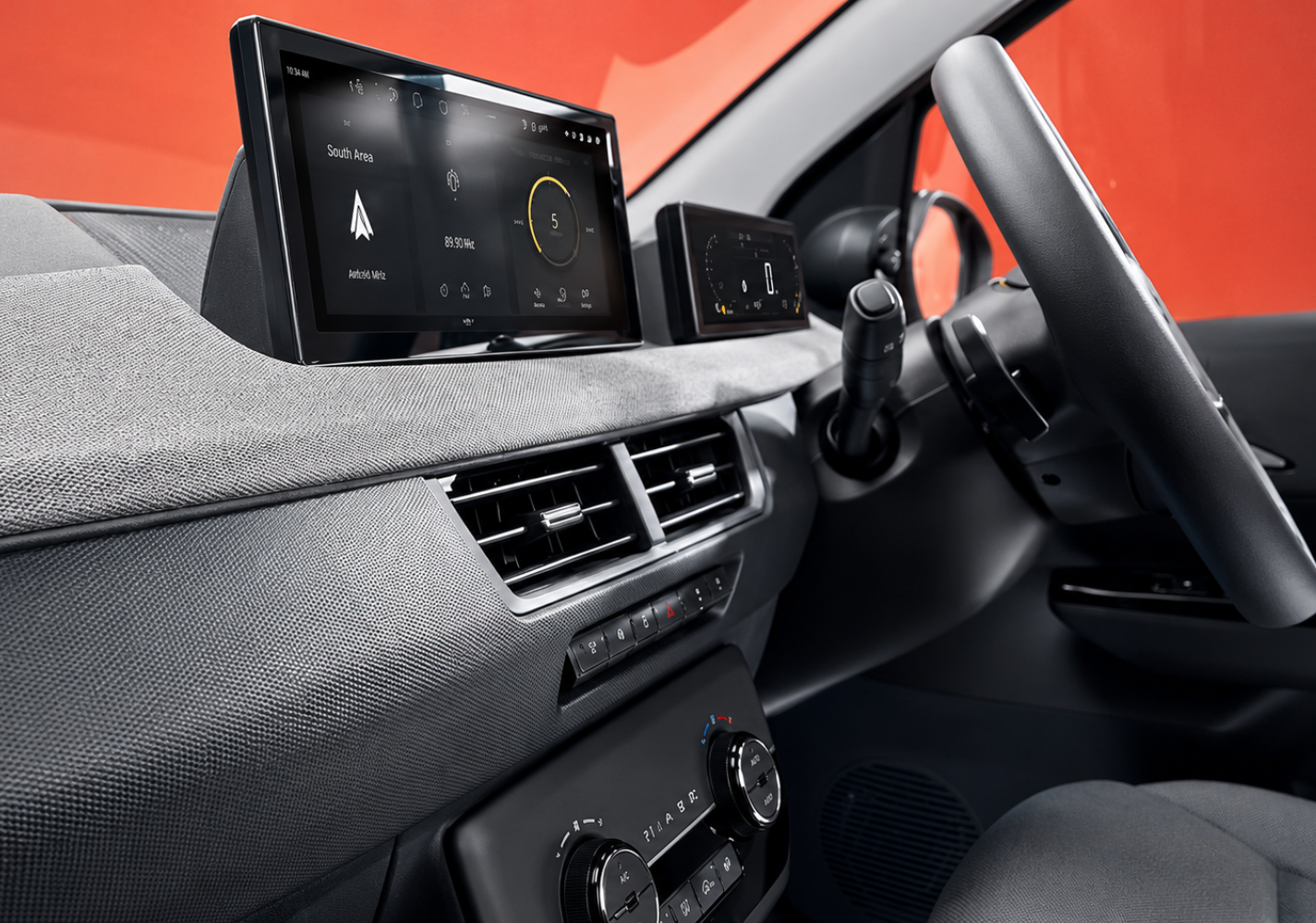
The interior of the Sierra EV is expected to closely mirror the ICE model’s cabin but with meaningful updates for the electric version. Top-spec variants are anticipated to feature a triple-screen dashboard layout a 10.25-inch digital instrument cluster, a 12.3-inch central touchscreen infotainment system and a 12.3-inch passenger-side screen. Lower variants are likely to offer a dual-screen setup along with a head-up display. EV-specific software functions energy management, charging status and range displays will be integrated into the existing interface. A different colour scheme and unique interior accents are also expected to distinguish the EV cabin from the standard Sierra’s interior.
Features Worth Noting
Beyond the screens, the Sierra EV is expected to come well-equipped. A panoramic sunroof, powered and ventilated front seats, a premium audio system and multiple drive modes are all anticipated. The suspension setup sees a meaningful upgrade over the ICE model a multi-link rear suspension replaces the earlier setup, promising improved ride quality. Vehicle-to-Load bidirectional charging is also expected to be standard across the range allowing the Sierra EV’s battery to power external devices. In practical terms, this means everything from a laptop to a small appliance can be powered directly from the car.
The Shift From FWD to RWD, And Why It Matters
One of the more technically significant changes on the Sierra EV is the drivetrain layout. The ICE Sierra uses front-wheel drive. The Tata Sierra EV switches to rear-wheel drive as its base configuration. This is the more natural layout for an electric vehicle placing the driven wheels at the rear where weight distribution and traction dynamics work in the platform’s favour. The AWD option adds a second motor at the front creating a proper dual-motor all-wheel-drive setup for those who want the maximum available performance and grip.
What June 30 Could Mean for the Indian EV Market
The Sierra EV’s debut arrives at a moment when India’s electric SUV segment is more competitive than it has ever been. The Hyundai Creta Electric has redefined buyer expectations for features and range. The Mahindra BE 6 has raised the bar on performance and technology. The Maruti e Vitara brings the country’s largest carmaker fully into the electric space for the first time. Into all of this arrives a nameplate with genuine emotional resonance backed by Tata’s growing EV expertise and an increasingly trusted service network. June 30 is a date worth marking.
Follow us on :
Join us on WhatsApp to never miss an update: https://whatsapp.com/channel/0029Vb8Fl286RGJGM6HEgX0N
Follow us on Instagram for the latest scoops: https://www.instagram.com/thegaragemotoring
Follow us on Facebook for the latest content:https://www.facebook.com/thegaragemotoring
Follow us on X and be the first to know everything on wheels: https://x.com/TGMotoring