
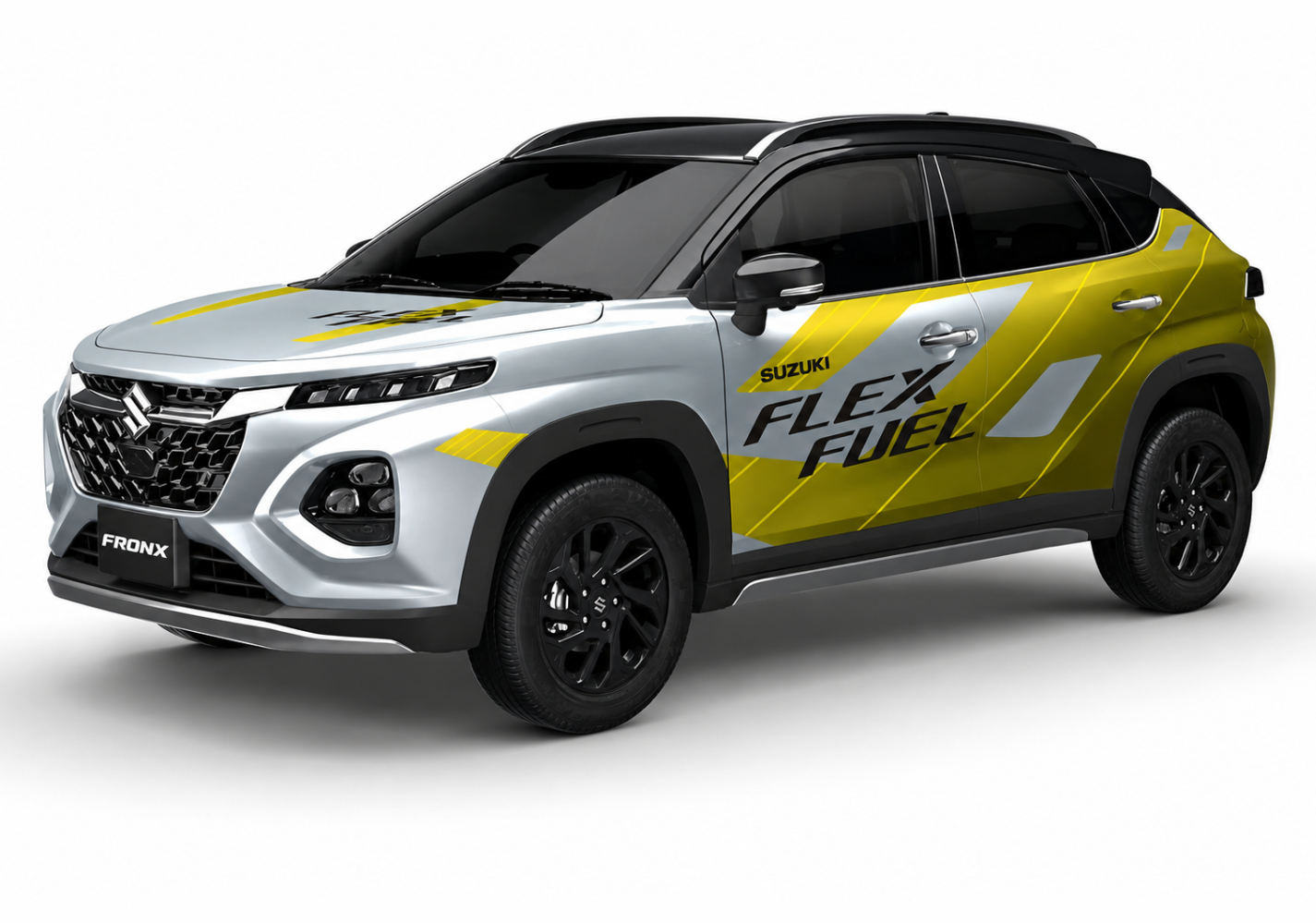
Mark your calendars. A Suzuki flex fuel vehicle is being unveiled on June 5, 2026 World Environment Day. Union Minister Nitin Gadkari made this announcement at an event in Nagpur. The upcoming model will reportedly run on E100 fuel that is 100 per cent pure ethanol. No petrol. Zero. This is a big moment for India’s automotive and energy story
Suzuki Flex Fuel Vehicle Confirmed for June 5, Wagon R or Fronx Running on Pure Ethanol?
Suzuki Flex Fuel Vehicle: What Did Gadkari Actually Say?
Gadkari was speaking at a public event in Nagpur when he dropped this announcement. He confirmed that a Delhi programme on Environment Day will see Maruti Suzuki unveil an E100-capable vehicle. He also spoke about India’s heavy dependence on imported fossil fuels. Around 87 per cent of petrol, diesel and gas consumed in India is imported. The minister made it clear that reducing this dependence is now a national priority. Toyota, Tata, Mahindra and Suzuki are all already working on flex-fuel solutions in India.
5 Big Highlights of the Suzuki Flex Fuel Vehicle Launch
1. June 5 unveil confirmed — World Environment Day is the chosen date for the big reveal in Delhi.
2. E100 compatible — The vehicle will run on 100 per cent pure ethanol.
3. Wagon R and Fronx are top candidates — Both have been showcased as flex-fuel prototypes previously.
4. Rs 40,000–50,000 additional cost — Adapting vehicles for higher ethanol blends adds to the initial price.
5. Volumes will be limited initially — Maruti expects meaningful sales only five to ten years from now.
Suzuki Flex Fuel Vehicle, Wagon R or Fronx, Which One Is It?
Maruti Suzuki has not officially confirmed the model name yet. However, two strong candidates have already emerged from previous showcases. The Wagon R was displayed as a flex-fuel prototype at the Bharat Mobility Global Expo 2024. The Fronx was shown in an E85-compatible flex-fuel version at Japan Mobility Show 2025. Earlier reports had also suggested the Fronx flex-fuel was on course for an India debut in 2026. Either way, June 5 should give us a definitive answer on which model makes the cut first.
What Changes Under the Hood for a Flex Fuel Vehicle?
Running on E100 is not as simple as just filling a different fuel. The Suzuki flex fuel vehicle will require significant engineering changes over a standard petrol model. Fuel lines, injectors and seals all need to be upgraded. Engine calibration also needs to be revised specifically for higher ethanol concentrations. Ethanol is more corrosive than petrol and absorbs moisture far more easily. These additional changes are estimated to add around Rs 40,000 to Rs 50,000 to the vehicle’s cost. That is not a small number but it could shrink as production scales up over time.
What Exactly Is E100 Fuel?
E100 is pure ethanol no petrol blended in at all. Compared to petrol, ethanol carries a higher octane rating. That means better combustion efficiency under the right engine conditions. However, specially designed engines and fuel systems are needed for E100 compatibility. India currently uses E20 as its standard blended fuel across petrol pumps. Bureau of Indian Standards specifications for E22, E25, E27 and E30 blends have also been introduced recently. E100 is the next and most ambitious step in this ethanol journey for India.
Already Has the Technology, But Volumes Will Take Time
Suzuki has been quietly preparing for this moment. Senior executive Rahul Bharti confirmed earlier this year that the company already has the technology ready. Both ethanol-blending and full flex-fuel capability are within Maruti’s current engineering reach. However, Bharti was also honest about the commercial reality of the situation. Volumes are expected to remain minimal in the early years. Meaningful sales figures from the Suzuki flex fuel vehicle segment could take five to ten years to materialise. Infrastructure for E100 fuel availability across India will also need to grow in parallel.
June 5 Could Be a Turning Point for Alternative Fuels in India
India importing 87 per cent of its fossil fuels is a problem that has existed for decades. The Suzuki flex fuel vehicle launch on June 5 will not solve that overnight. But it is a meaningful step in the right direction. Ethanol is domestically produced, largely from sugarcane. A shift towards E100 vehicles could reduce import bills, cut emissions and support Indian farmers simultaneously. If Maruti, India’s largest carmaker, leads this charge, others are likely to follow quickly.
Follow us on:
Join us on WhatsApp to never miss an update: https://whatsapp.com/channel/0029Vb8Fl286RGJGM6HEgX0N
Follow us on Instagram for the latest scoops: https://www.instagram.com/thegaragemotoring
Follow us on Facebook for the latest content:https://www.facebook.com/thegaragemotoring
Follow us on X and be the first to know everything on wheels: https://x.com/TGMotoring

One thought on “Suzuki Flex Fuel Vehicle Launch on June 5, E100?”