

BYD India just made its boldest move yet in the Indian automobile market. The Chinese automotive giant officially announced the launch of its first plug-in hybrid SUV in India on June 9, 2026.The BYD India PHEV launch is genuinely one of the most significant automotive events in India this year. If BYD prices the Sealion 6 or the Atto 2 competitively, it will create a new category in the Indian market almost overnight.
For buyers currently considering the Hyundai Creta, Kia Seltos, or even the Maruti Grand Vitara, it makes sense to wait until June 9 before making a final decision. The BYD PHEV may offer a compelling alternative or it may confirm that your original shortlisted car remains the better value. Either way, you will know more after June 9. India’s automotive landscape is shifting faster than ever. And on June 9, BYD India takes its most important step yet in reshaping it.
What is BYD India Launching and Why Does it Matter?
The BYD India PHEV launch marks a significant turning point for the Indian car market. Until now, BYD India sold only pure electric vehicles in the country. This time, however, the brand steps into completely new territory with a plug-in hybrid electric vehicle, commonly known as a PHEV. Furthermore, BYD is not just any new entrant. The brand currently holds the title of the world’s largest electric vehicle manufacturer. Therefore, its entry into India’s hybrid space carries serious weight. Consequently, every major carmaker in India from Maruti Suzuki to Hyundai to Tata Motors will watch this launch closely.
BYD’s DM-i Super Hybrid The Technology Behind the Launch
The upcoming model will use BYD’s globally acclaimed DM-i Super Plug-in Hybrid EV powertrain. This technology is not new to the world; BYD already sells millions of DM-i powered cars across China, Europe, and Southeast Asia. However, this will be its first appearance in India.
So what exactly is the DM-i system? In simple terms, it is a plug-in hybrid setup that combines a petrol engine with a large battery pack. The system prioritises electric driving for efficiency. The petrol engine primarily acts as a generator to charge the battery, rather than directly driving the wheels. As a result, fuel consumption drops dramatically even without plugging in regularly.
Additionally, the DM-i system is known for its seamless power delivery. Drivers experience no jerks, no turbo lag, and no gear hunting. It drives more like an electric car than a traditional petrol hybrid. This is precisely what makes BYD’s DM-i technology stand apart from conventional mild hybrids sold in India today.
5 Things You Must Know About the BYD India PHEV Launch
- BYD India officially confirmed the PHEV launch date as June 9, 2026 just days away.
- The new model will use BYD’s DM-i Super Plug-in Hybrid EV powertrain a global bestseller.
- The launch candidate is most likely the BYD Sealion 6 or the BYD Atto 2.
- The Sealion 6 claims a staggering 1,092 km of combined range on a full tank and full charge.
- This will be BYD India’s first-ever PHEV a major shift from its pure-EV strategy so far.
Sealion 6 or Atto 2 Which BYD Model is Coming to India?
This is the big question right now. BYD India has not officially confirmed the model name yet. However, strong industry indications point toward two candidates the BYD Sealion 6 and the BYD Atto 2.
BYD Sealion 6: The Strong Favourite
Most industry watchers currently favour the Sealion 6 as the more likely launch candidate. And looking at its specifications, it is easy to understand why.
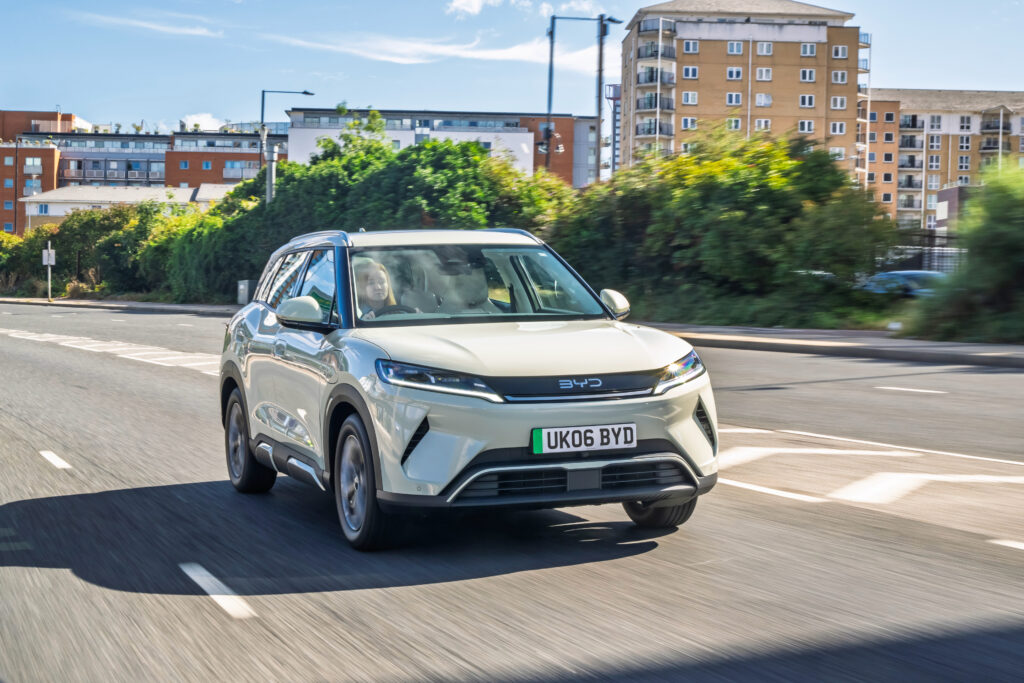
The Sealion 6 is a mid-size SUV that sits in a competitive price segment globally. It comes with two powertrain options. The first uses a 1.5-litre naturally aspirated petrol engine paired with an 18.3 kWh battery pack. The second, more powerful option uses a 1.5-litre turbo-petrol engine paired with a larger 26.6 kWh battery pack.
Most importantly, the Sealion 6 claims a combined range of up to 1,092 km that is petrol range plus electric range combined. This figure alone will grab the attention of every long-distance Indian driver.
The electric-only range on the larger battery variant is also substantial, making daily city commutes nearly petrol-free. Moreover, the Sealion 6 features a premium interior, large touchscreen display, and BYD’s latest connected car technology.
BYD Atto 2 The Compact Dark Horse
Meanwhile, the BYD Atto 2 remains a possibility that industry insiders are not ruling out. The Atto 2 is a compact SUV smaller and more affordable than the Sealion 6. It would sit below the existing BYD Atto 3 in the brand’s India lineup. A PHEV version of the Atto 2 would directly compete with mid-size compact SUVs like the Hyundai Creta and Kia Seltos. However, at this stage, most evidence points more convincingly toward the Sealion 6 for the June 9 reveal.
How Does 1,092 km of Range Change the Game for Indian Buyers?
Range anxiety is the single biggest concern for Indian EV and hybrid buyers today. Most buyers worry about running out of charge on highways, especially between cities where charging infrastructure is still developing. The BYD India PHEV launch directly addresses this concern. With up to 1,092 km of combined range, the Sealion 6 effectively eliminates range anxiety altogether. An Indian family can drive from Mumbai to Goa without stopping at a petrol pump if they charge at home. Furthermore, plug-in hybrid technology gives buyers the best of both worlds.
In the city, the car runs predominantly on electric power silent, smooth, and nearly free to run. On long highway drives, the petrol engine takes over seamlessly. Therefore, buyers do not need to worry about finding charging stations on national highways. This flexibility is something that pure electric vehicles currently cannot offer. Additionally, PHEV owners who install a home charger spend significantly less on fuel than petrol or diesel SUV owners. Consequently, the total cost of ownership over five years could be considerably lower than a comparable petrol SUV.
Where Does BYD India’s PHEV Fit in the Indian Market?
Currently, the plug-in hybrid segment in India is nearly empty. Toyota sells the Vellfire PHEV, but it is a premium MPV priced above ₹1 crore. No mainstream manufacturer currently offers an affordable PHEV SUV in India. Therefore, BYD India steps into a segment with virtually no direct competition at launch. This is a rare market opportunity and BYD knows it. However, indirect competition is intense.
The Maruti Suzuki Grand Vitara and Toyota HyRyder offer strong hybrid technology at around ₹15–20 lakh. These cars deliver up to 27.97 kmpl but cannot run on electric power alone. A BYD PHEV that offers full electric driving plus 1,000-plus km combined range would clearly outperform them on paper. The critical factor, as always, will be price. If BYD India prices the Sealion 6 PHEV aggressively ideally under ₹25–28 lakh it will create genuine disruption in the segment. However, if prices push toward ₹35 lakh and above, the volume impact will be limited to premium buyers only.
BYD India’s Growing Ambition From Niche EV Player to Mainstream Contender
It is worth remembering where BYD India started. The brand entered India in 2022 with the BYD Atto 3 a pure electric SUV priced at around ₹34 lakh. It was a decent car but catered to a niche premium audience. Subsequently, BYD launched the BYD Seal sedan and the BYD Sealion 7 SUV, both fully electric, both premium-priced. Sales were respectable but never mass-market. The brand was present, but it had not yet broken through to the mainstream Indian buyer. The BYD India PHEV launch on June 9 signals a clear change in strategy.
BYD now wants to reach the volume buyer the Indian family that is curious about new technology but not yet ready to go fully electric. A plug-in hybrid is the perfect bridge product for exactly this audience. Moreover, BYD’s global scale gives it a significant cost advantage over most rivals. The company manufactures its own batteries, semiconductors, and electric motors in-house. This vertical integration allows BYD to price aggressively when it chooses to. If BYD India decides to bring the Sealion 6 PHEV at a competitive price, it will force every mainstream carmaker in India to respond.
What Should Indian Buyers Expect on June 9?
On June 9, BYD India will formally unveil and likely price its first PHEV for India. Here is what buyers should watch for on launch day. First, the ex-showroom price will be the most important announcement. It will determine whether this car reaches mainstream buyers or stays in the premium space.
Second, buyers should watch for battery warranty terms BYD typically offers strong battery warranties globally, and India should be no different. Third, the charging infrastructure tie-ups will matter BYD India is expected to announce home charger installation support and public charging partnerships alongside the launch. Additionally, variant details, colour options, and booking amounts will likely come on June 9 itself. Test drives are expected to begin shortly after the official launch event
Follow us on:
Join us on WhatsApp to never miss an update: https://whatsapp.com/channel/0029Vb8Fl286RGJGM6HEgX0N
Follow us on Instagram for the latest scoops: https://www.instagram.com/thegaragemotoring
Follow us on Facebook for the latest content: https://www.facebook.com/thegaragemotoring
Follow us on X and be the first to know everything on wheels: https://x.com/TGMotorin
One thought on “BYD India’s First PHEV Launch on June 9: A Game Changer That Could Shake India’s SUV Market”